
History awaits: Our Top 5 fascinating sites not far from Salisbury.
September 2025
Salisbury is a treasure trove of history but what's on offer if you travel further afield within Wiltshire?
The surrounding landscapes are alive with ancient monuments & medieval ruins just waiting to be explored. From the prehistoric stones of Stonehenge to the dramatic earthworks of Old Sarum, the area offers a journey through time like no other. Whether you’re a history buff or simply love a good adventure, these five historic sites not far from Salisbury are must-see destinations for uncovering the region’s rich historical & archaeological past.
1. Old Sarum
Figures 1 & 2. Images of Old Sarum including the view across Hudsons Field (top) & view towards the keep from the main car park (bottom).
2. Figsbury Ring


Figures 3 & 4. Several images of Figsbury Ring including the ring itself (left) & from the outside bank looking west (right).
Figsbury Ring is another iron age hillfort located several miles to the north east of Salisbury. The site is situated on high ground, so stand on the outer rampart & you will have amazing clear uninterrupted views in all directions. Eagle eyed visitors will also be able to spot Old Sarum located 3 miles to the west. Entry & parking is free.
How to get there
The site is around 15 minutes to drive from Salisbury & is accessed from the main road via a single lane track with parking places leading up to the car park. The track is not well maintained so take it slow. Also, try not to visit during rush hour as it may take a while to get back into the city due to the traffic.
3. Clarendon Palace


Figures 5 & 6. Images of Clarendon Palace ruins including view of the site from the entrance gate (left) & the main hall (right).
The Clarendon Way is a 26-mile pilgrimage walking route that connects the cathedrals of Salisbury in Wiltshire & Winchester in Hampshire. The route is divided into four manageable sections & many walkers are able to complete the entire route in just two days, stopping off overnight in one of the villages along the route. If you are not feeling quite that energetic you could always walk part of the first section—a 3 mile route leading from Salisbury Cathedral to the ruins of Clarendon Palace located on the Clarendon Park Estate. Established in the 12th century by Henry I, Clarendon Palace was once a Royal Palace & hunting lodge frequented by royalty, which was, by the 15th century, abandoned.
You will need suitable walking shoes, plenty of water & a reasonable level of fitness.
How to get there
This is a walking route only & is reached by a footpath leading through the Clarendon Park Estate. Walk to the bridge at Milford & follow the road up the hill. You will eventually reach the pedestrian entry to the Clarendon Park Estate.
4. Stonehenge
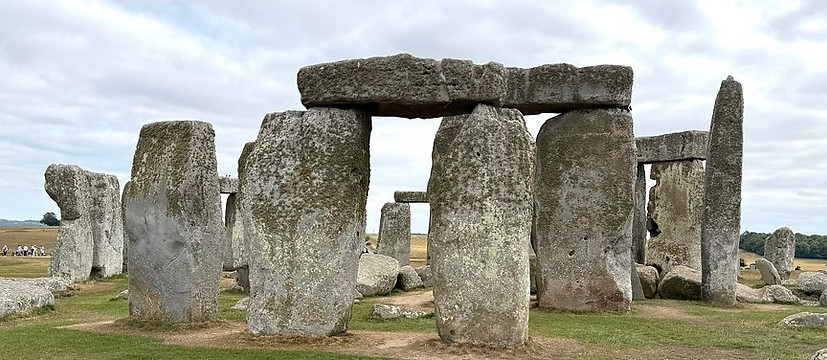
Figure 7. Image of the stones of Stonehenge.
The world famous prehistoric monument of Stonehenge is located just over 10 miles to the north of Salisbury. The site is operated by English Heritage & as a visit for the whole family can be very expensive you may want to consider becoming a member. This works out cheaper if you are visiting numerous sites throughout the year.
Tickets can be purchased in advance or on the day in the Visitors Centre. Within the centre is an exhibition that will provide you will an insight to the site before you journey down to the stone circle on a hop-on bus. Walking around the stone circle, the enormity of the construction becomes clear. Each sarsen stone, some weighing over 20 tons, stands as a testament to the ingenuity & determination of people from a time long before recorded history. Back at the Visitors Centre you will find a shop, cafe & toilets.
How to get there
It takes around 30 minutes by car & parking is available at the site. You can also catch the bus which will take slightly longer. You can also park at Woodhenge for free & walk the path to Stonehenge. Although you wont have access to the Visitors Centre you will be able to view Stonehenge for free from the other side of the fence.
5. Woodhenge & Durrington Walls

Figure 8. The site of Woodhenge with concrete posts marking the locations of previous wooden posts.
Woodhenge is a neolithic site only recently discovered (1925) when aerial photography noted dark spots in the agricultural field. Concrete posts have now been placed in the these areas which have been identified as previous timber posts. Woodhenge is located only 3 miles east of Stonehenge.

Figure 9. View of Durrington Walls site from the outer bank.
Just across the road & literally a 2 minute walk away from Woodhenge is Durrington Walls, the site of a large neolithic settlement, which today can be seen as a ridge (bank & ditch) surrounding a large central basin. The site is so large that the main A345 road, running from Amesbury to Durrington, divides the site in two.
How to get there
It takes around 20-30 minutes to drive from Salisbury. There is a small free parking area next to the site. Entry to both areas is free & also open during daylight hours.
So that our Top five historical sites to visit if you decide to venture beyond the limits of Salisbury. Exploring further afield allows you to experience hidden gems, breathtaking landscapes & fascinating stories that lie just a short journey away. Each destination adds depth to your visit, giving you a richer sense of the culture, heritage & character of Wiltshire & beyond.
Stepping outside the city truly transforms a trip to Salisbury into a wider adventure. So what are you waiting for - Get out & Trek!


Old Sarum is an an iron age hillfort (fortified village) located approximately 2 miles to the north of Salisbury.
The site, known to have Paleolithic origins, was occupied during the Roman conquest, the Anglo-Saxon period & also following the Norman conquest when large scale fortifications were built along with a castle & cathedral.
The site is now run by English Heritage, so if you’re a member, you can get in free. If not, no worries — you only pay to enter the inner mott & Bailey which contains the castle ruins (see Figure 2). You can still wander around the outer areas, containing the cathedral foundations, & ramparts for free. It’s a great spot for a relaxed walk, a bit of history, & some amazing views looking down onto the city below.
How to get there
It’s about an hour’s slow walk up along the banks of the river Avon from Salisbury, or you can just hop on the bus — it stops right across the road from the site. Parking, for a fee, is also available at the site if you want to visit under your own steam.